

A Varanasi ghats walk follows the riverfront steps beside the Ganges, where sites for bathing and worship sit alongside cremation ghats. You can begin at Assi Ghat in the south and use the named ghats as landmarks along the river, while keeping in mind that Manikarnika is an active cremation site.
The route is best understood as a sequence of distinct places, not one continuous attraction: the ghats serve different purposes, and the riverfront’s steps connect to the city’s lanes.
- Varanasi has 88 ghats along the Ganges.
- Assi Ghat is south of the busier central ghats.
- Dashashwamedh Ghat is described as the main ghat on the Ganga in Varanasi.
- Manikarnika Ghat is used for cremation throughout the day.
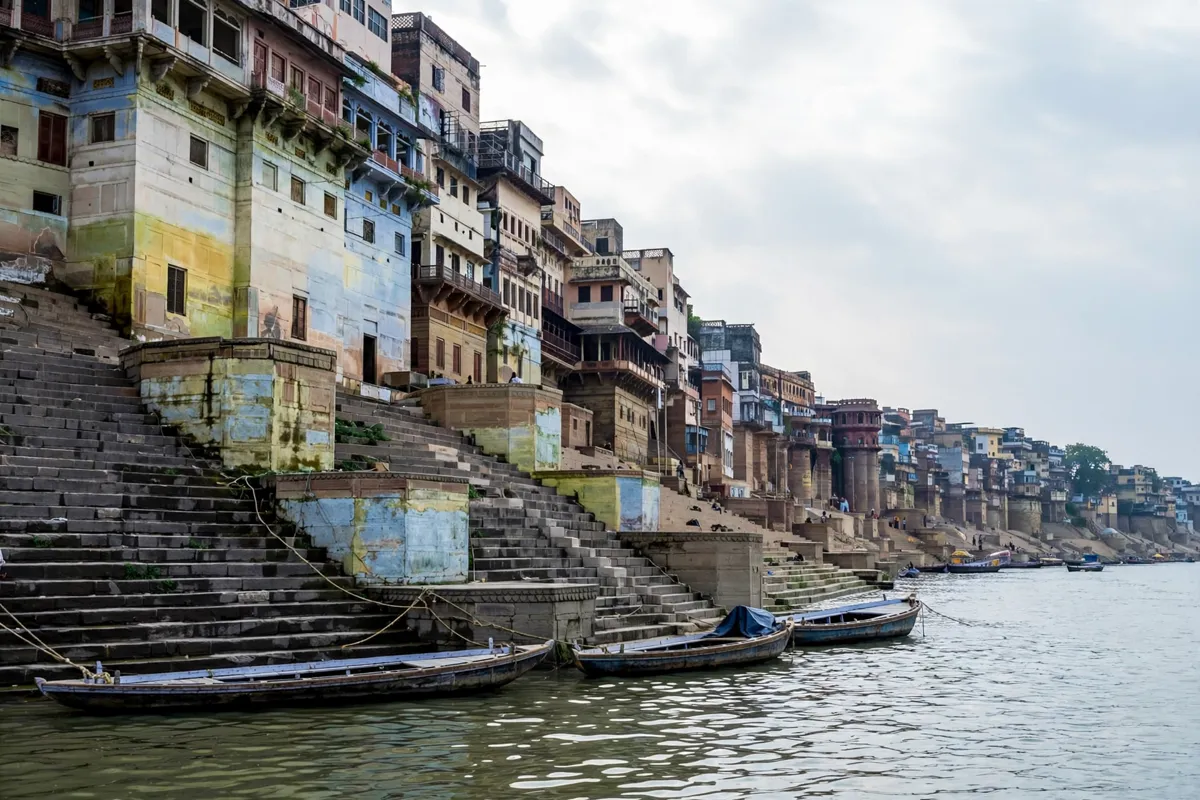
How the ghats line the riverfront
The ghats are steps leading down to the banks of the River Ganges, and they form a long series of separate riverfront sites. Varanasi Smart City describes the city as having 88 ghats; most are used for bathing and puja, while two are exclusively cremation sites.
Names along the river include Asi, Kedara, Dashashwamedha, Man Mandir, Lalita, Manikarnika, Scindia, Panchganga and Adi Keshva. A Government of India tourism document gives a sequence from Asi Ghat to Kedara Ghat, then Dashashwamedha Ghat, Man Mandir Ghat to Lalita Ghat, and Manikarnika Ghat.
The riverfront also carries a tradition of bathing and worship, including puja offered to the rising Sun. As you plan a walk, treat each ghat as a place with its own use and character rather than assuming every set of steps serves the same purpose.
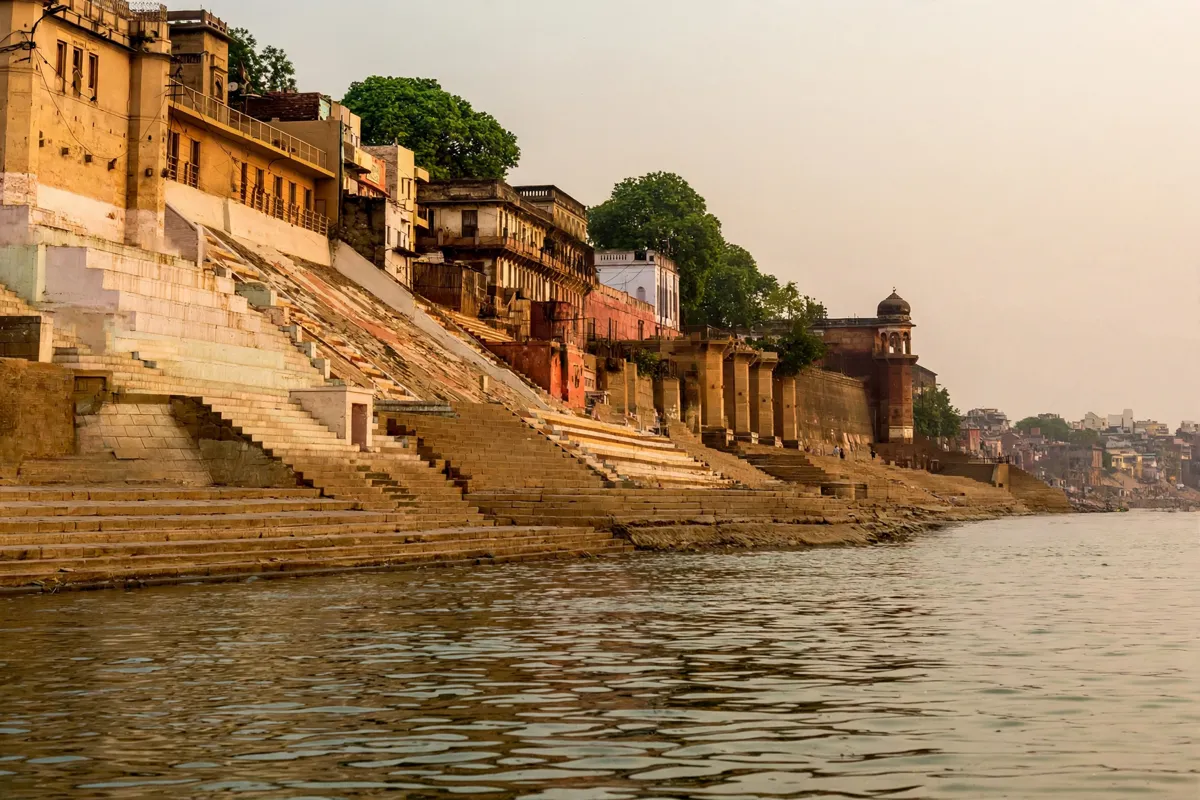
Starting at Assi Ghat
Assi Ghat is near Shivala, south of Varanasi’s busier central ghats, making it a distinct southern starting point for a riverfront walk. The site is used for bathing and worship, and its morning activity is part of its everyday rhythm.
Varanasi Smart City says at least 300 people gather at Assi Ghat each morning, with attendance rising during Mahashivratri and other auspicious Hindu festivals. If you want to begin while the ghat is active, go in the morning; larger festival gatherings follow their own seasonal pattern.
From Assi, continue by following the riverfront and its named ghats rather than expecting a single marked promenade. The documented sequence includes the stretch from Asi Ghat to Kedara Ghat before the central Dashashwamedha area.
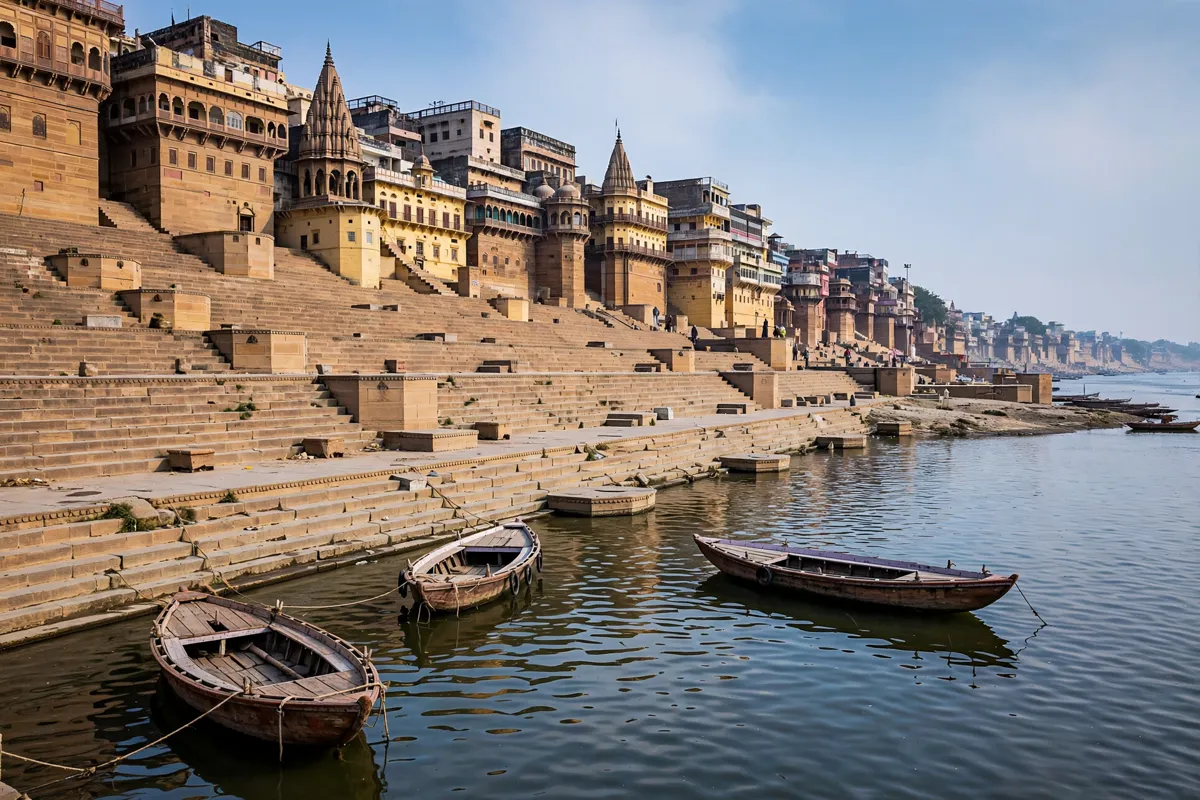
Following the river toward Dashashwamedh Ghat
Dashashwamedh Ghat is identified as the main ghat on the Ganga in Varanasi and lies close to Kashi Vishwanath Temple. It is a central landmark on a walk north from the southern ghats.
Incredible India describes Dashashwamedh Ghat as open 24 hours a day and identifies the Ganga Aarti as a notable experience there, without giving an event time. Check the official site before you go for current practical details. If the ceremony is part of your plan, read about what visitors should know at the Dashashwamedh Ghat Ganga Aarti.
The ghat’s setting close to Kashi Vishwanath Temple makes the two places natural landmarks to consider together. Keep the route flexible: the known sequence of ghats helps with orientation, but does not establish a walking time or distance between them.
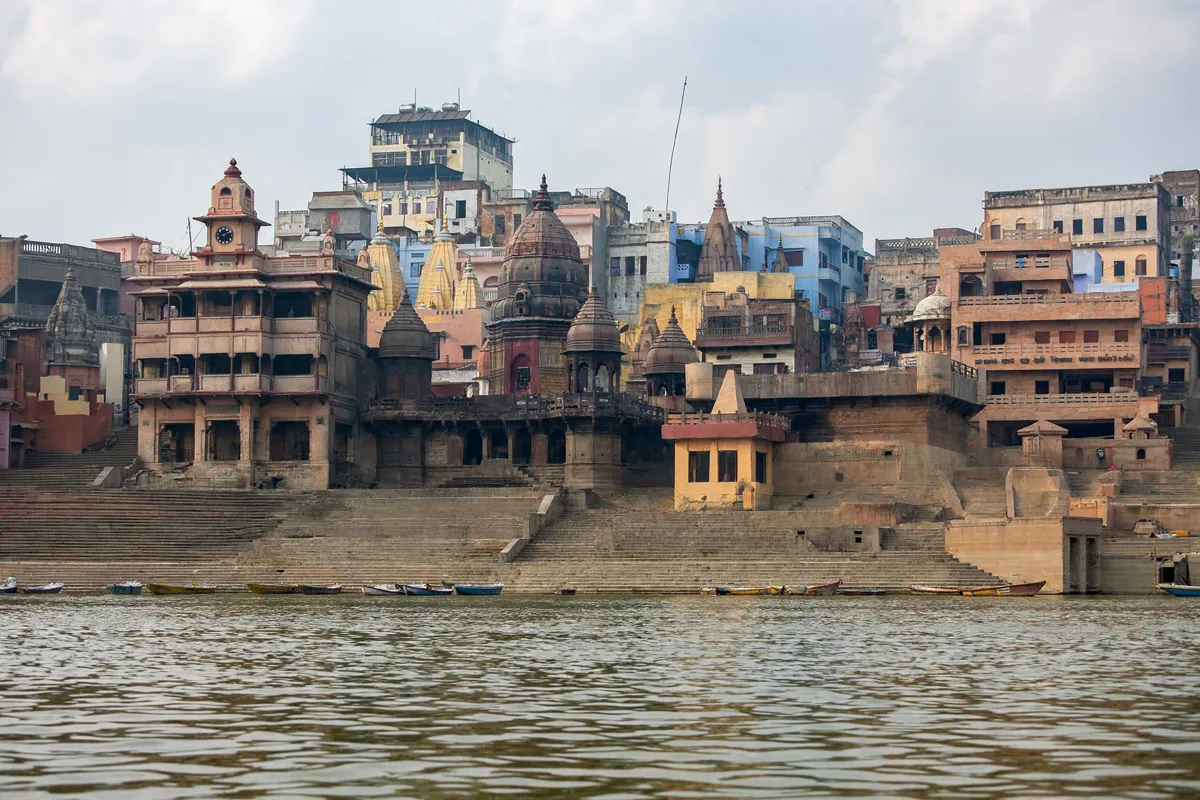
Understanding Manikarnika Ghat respectfully
Manikarnika Ghat is one of Varanasi’s two cremation ghats and is used for cremation throughout the day. It is a working cremation site, not a conventional sightseeing stop.
Approach the area with care and respect for families and ceremonies taking place there. The Government of India tourism document places Manikarnika among the named ghats in the riverfront sequence, after the Man Mandir and Lalita areas; that context can help you understand its place without treating the site as an event to watch.
The city’s ghats have varied purposes: while most are used for bathing and puja, cremation activity takes place at two. Keep that distinction in mind as you move between the public riverfront steps.
Steps, access and choosing a walking distance
A Varanasi ghats walk can be planned as a shorter visit to one ghat or as a longer, flexible route between named riverfront areas. The available sequence gives useful landmarks, but not a measured route or walking duration, so choose your endpoint according to your own pace and conditions.
Hotel Padmini International is a three-star hotel in Varanasi; its Padmini International hotel rooms are listed online.
Ghats are steps down to the riverbank, with connections to nearby city lanes. Take care on the steps and allow room for people using the ghats for bathing, worship and daily activities.
Because the route is made up of distinct sites, you can pause or turn back at a named ghat rather than treating the entire riverfront as one uninterrupted walk.
For a wider city plan, the one-day Varanasi itinerary can help place the riverfront among other stops.
FAQs
Where should a Varanasi ghats walk start?
Assi Ghat is a clear southern starting point, near Shivala and south of the busier central ghats. From there, the named ghats provide landmarks as you follow the riverfront.
What is the main ghat in Varanasi?
Dashashwamedh Ghat is described as the main ghat on the Ganga in Varanasi. It is close to Kashi Vishwanath Temple.
Is Manikarnika Ghat a cremation site?
Yes. Manikarnika is one of Varanasi’s two cremation ghats, and cremations take place there throughout the day. Treat it as an active religious site and behave respectfully.
How many ghats are in Varanasi?
Varanasi Smart City says the city has 88 ghats. Most are used for bathing and puja, while two are exclusively cremation sites.
How can you get around Varanasi?
For practical transport context beyond the riverfront route, getting around Varanasi from the hotel area is covered in a separate city guide.